Master Your Literary Journey with a Comprehensive Planner
There's a unique kind of magic in turning the last page of a great book, but the real challenge for any avid reader isn't just finding the time to read—it's organizing the journey itself. We accumulate wish lists that grow faster than we can read, forget the poignant quotes we swore we'd remember, and lose track of which recommendations came from which friend. For those who view reading not just as a pastime but as a deliberate practice of learning and growth, a simple mental note won't suffice. This is where a structured system becomes invaluable, transforming scattered intentions into a curated, reflective, and deeply personal literary life.
More Than Just a List: The Anatomy of an Effective Reading System
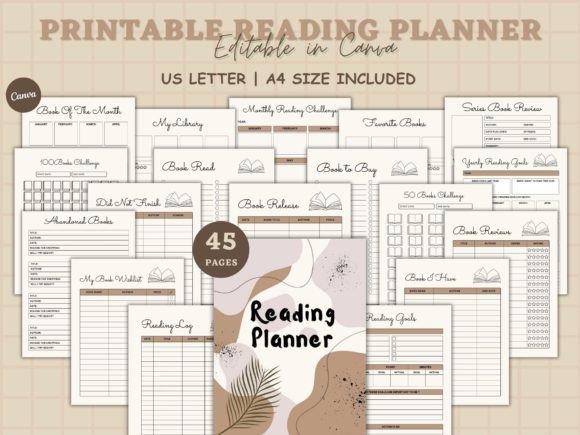
Imagine a single, beautifully designed hub for every facet of your reading life. This isn't a generic notebook; it's a dedicated Book Reading Planner Book Review Logbook engineered for engagement. At its core, it’s a customizable printable bundle designed for 2024, offering the flexibility of both A4 and US Letter sizes in editable Canva and PDF formats. The true power lies in its modular components. It moves beyond a simple "books read" list to include a nuanced Reading Log for tracking dates and progress, a detailed Book Review section to articulate your thoughts, and a Monthly Reading Journal for reflective practice. For the goal-oriented reader, dedicated pages for Yearly Reading Goals and a 2024 Reading Challenge provide structure and motivation.
The aesthetic appeal is intentional. A minimalist design ensures the focus remains on your content—the books and your reflections—without visual clutter. This clean, modern typography approach makes the planner feel less like a chore and more like a cherished companion. It's a printable bundle that respects the reader's time and taste, offering a serene visual field that encourages daily use. Whether you're a student, a professional, or a retiree rediscovering the joy of reading, the planner's universal design speaks to a shared love for the written word.
From Personal Tool to Professional Asset: Applications for Creatives
While the primary user is the book enthusiast, the underlying design principles and customizable framework of this planner bundle offer surprising utility for professionals in creative fields. The very act of organizing content logically and presenting it clearly is a fundamental skill in design, marketing, and entrepreneurship.
Consider the Book Review Log component. For a book blogger or content creator, this isn't just a personal journal; it's a pre-formatted editorial layout. It provides a consistent structure for reviews, which is crucial for building a recognizable brand voice and visual consistency across a blog or social media feed. The sections for notes, quotes, and ratings are directly transferable to drafting a review post. The Monthly Reading Log can be adapted into a content calendar, tracking not just books read but articles researched, podcasts consumed, and courses completed—fueling a diverse content pipeline.
For small business owners and entrepreneurs in the literary space—such as indie bookstore owners, subscription box curators, or literary event planners—this bundle is a design asset. The Library Book Tracker and Finished Books lists can be repurposed as inventory logs or customer recommendation sheets. The Book Wishlist transforms into a market research tool, identifying trending genres and titles. The editable nature of the files means you can seamlessly add your branding—your logo, brand colors, and fonts—to create professional-looking internal documents or customer-facing handouts that reinforce your brand identity.
The Power of Editable Design: Tailoring to Your Project's Needs
The true value of a premium, editable template lies in its adaptability. The provided Canva and PDF files are not static; they are a starting point. The instructions are clear: you can change or delete the background, modify text color, size, and font, and add new text/elements. This level of customization is what elevates a generic planner into a specialized tool.
A graphic designer could take the Book Review page and, by applying a sophisticated serif font and a textured background, create a vintage-inspired journal for a client's packaging design project. A social media manager could extract the "Book of the Month" template, alter it with a bold display font and vibrant colors, and have a ready-made social media graphics template for a monthly feature post. The 2024 and 2025 Calendars included in the bundle can be customized with a sans serif font for a clean, corporate look suitable for a marketing team's internal planning or a web design project's timeline.
This process of customization is also an exercise in font pairing. The planner's neutral base allows you to experiment. Would a script font for headings paired with a readable sans serif font for body text create the right emotional resonance for a literary journal? Would a uniform, modern typeface ensure maximum readability for a professional logbook? The bundle becomes a sandbox for testing typographic hierarchy and visual communication strategies applicable to any creative project.
Practical Guidance for Implementation and Brand Alignment
Adopting a new organizational system is most successful when it aligns with your existing workflows and goals. Here’s how to integrate this planner effectively, whether for personal use or professional application:
- Start with Your "Why": Are you using this to hit a personal reading goal, to organize research for a novel, or to create a branded product for your shop? Your objective will dictate which templates you prioritize and how you customize them. A brand strategist might focus on ensuring every customized page reinforces brand colors and typography, while a hobbyist might simply enjoy the aesthetic of a well-organized reading life.
- Test Before You Commit: Before printing the entire bundle, customize and print one or two key pages, like the Monthly Reading Log or Book Review. Use them for a week. Does the layout work for your note-taking style? Is there enough space for your memorable quotes? This practical test is more valuable than any theoretical planning.
- Think in Systems: If you're a creator, consider how the planner integrates with your other tools. Can the Reading Goals page inform your annual content strategy? Can the Book Wishlist feed into your affiliate marketing links? Viewing the planner as a component within a larger system increases its utility exponentially.
- Leverage the Editability for Commercial Projects: If you plan to use a customized version of this planner as part of a digital product you sell (e.g., a "Writer's Toolkit" or "Book Club Kit"), carefully review the licensing. The ability to add your branding is a significant advantage, but ensure the original template's terms allow for commercial distribution of the final, transformed product. This due diligence protects your business and respects the original creator's work.
In the end, whether you're meticulously documenting your 50th book of the year or crafting a client-facing marketing asset