Give Your Projects a Personal Touch with Handwritten Fonts
There's a reason handwritten styles continue to dominate design trends. In a world saturated with sleek, corporate aesthetics and sterile sans-serifs, a touch of human imperfection creates an instant connection. It signals warmth, authenticity, and approachability. Whether you are a small business owner trying to build a brand that feels like a friend, or a content creator looking to stop the scroll on social media, typography is your most powerful tool for setting the mood. However, finding the right font can often feel like searching for a needle in a haystack. You want something unique, but legible; playful, but professional. This is where a curated collection of typefaces becomes an invaluable asset for any creative toolkit.
Why a Curated Collection Beats Individual Files
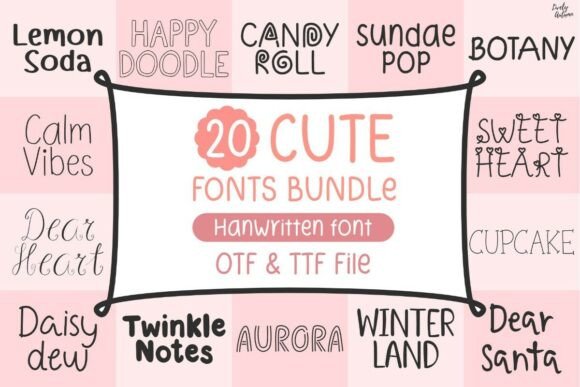
If you have ever spent hours scrolling through font libraries trying to find the perfect match for a logo or a wedding invitation, you know how exhausting the process can be. Purchasing individual fonts often leads to a disjointed aesthetic across your projects because they come from different designers with different styles. A Cute Handwritten Font Bundle solves this problem by offering a cohesive yet varied range of styles under one umbrella.
The specific value of a bundle lies in its versatility. You aren't just buying one look; you are buying a spectrum of moods. For instance, within a single collection, you might find a font that is perfect for a cozy, rustic bakery brand, and right next to it, a typeface that screams summer freshness for a lemonade stand or a tropical vacation blog. This variety allows you to maintain a consistent "vibe" in your design assets without becoming repetitive.
From a practical standpoint, having a library of 20 unique handwritten fonts means you are prepared for any creative brief that comes your way. Imagine you are designing a series of social media graphics. You want them to look related but not identical. By using different weights and styles from the same collection—perhaps using Lemon Soda for headers and Fresh Notes for sub-text—you create a professional hierarchy that guides the viewer's eye effortlessly.
Real-World Applications: From Branding to DIY Crafts
The true test of a creative font is how well it performs in the real world. It’s not just about how it looks on your screen; it’s about how it prints, how it scales, and how it resonates with your audience. Here is how you can leverage a diverse font collection to elevate different types of projects.
Small Business Branding and Packaging
For small business owners, particularly those in the handmade, beauty, or food industries, packaging design is everything. A font like Cupcake or Sugar immediately communicates sweetness and indulgence, making them perfect for a bakery or confectionery. Conversely, a font like Botany or Daisy Dew evokes nature and freshness, ideal for organic skincare lines or florists.
Using these fonts on your packaging helps build brand recognition. When a customer sees your product on a shelf, the typography should tell a story before they even read the words. A premium font with high-quality rendering ensures that your labels look crisp and professional, whether printed on a matte sticker or a glossy box.
Digital Marketing and Social Media
In the fast-paced world of digital marketing, social media graphics need to be eye-catching. Script fonts and handwritten styles are excellent for creating focal points in your designs. They break up the monotony of standard web fonts and add a layer of personality.
Consider using a playful font like Happy Doodle or Twinkle Notes for Instagram Stories or Pinterest pins to create a fun, engaging atmosphere. However, it is crucial to balance style with readability. A common mistake is using a highly decorative script font for long paragraphs. Instead, use these handwritten styles for short, impactful headlines or call-to-action buttons, and pair them with a clean sans serif font for the body text.
Editorial Design and Blogging
Bloggers and digital publishers often struggle to find a typographic voice that feels personal yet readable. A collection like this offers a solution for creating stunning blog headers, pull quotes, and featured images. Fonts like Calm Vibes or Cozy Hours can add a lifestyle element to your blog, making your content feel more like a conversation with a friend rather than a corporate article.
When working on editorial design, pay attention to the x-height and baseline of the fonts. Handwritten fonts vary wildly in their construction. Some have tall ascenders and descenders, which look beautiful in large sizes but can cause spacing issues in tight layouts. Always test your font pairings by placing a headline next to your body copy to ensure they don't clash visually.
Strategic Typography: Choosing the Right Style
With 20 fonts in a bundle, the choice can be overwhelming. How do you decide which one to use? The decision should always be driven by the project's goal and the target audience.
Think of your fonts as having "personalities." A font like Dear Santa or Winter Berry has a distinct seasonal personality—warm, festive, and nostalgic. These are perfect for holiday marketing campaigns, seasonal sublimation designs, or festive greeting cards. On the other hand, fonts like Aurora or Moonlight might offer a more elegant, ethereal vibe, suitable for wedding invitations or high-end boutique branding.
When selecting a font for a logo, consider the longevity of the design. While a trendy, messy script might look cool today, will it still look professional in five years? For logo design, it is often safer to choose a handwritten font that has a clean structure and is easy to read at small sizes.
Font Pairing Essentials
The secret to professional design is rarely using a single font. It is about the interplay between different typefaces. A general rule of thumb is to contrast styles. If you choose a flowing, cursive script font for your header, pair it with a rigid, geometric sans serif font for your details.
For example, if you are designing a menu for a cafe using the Lemon Soda font for food categories, use a simple sans-serif for the prices and descriptions. This ensures that the decorative font adds charm without sacrificing the functionality of the menu. This approach to modern typography creates visual hierarchy and makes your designs easier to navigate.
Technical Considerations and Licensing
A beautiful design can be ruined by technical issues. When working with a Cute Handwritten Font Bundle, you need to ensure the files are formatted correctly for your software. The inclusion of both OTF (OpenType Font) and TTF (TrueType Font) formats is standard for design assets, ensuring compatibility with both Mac and Windows systems, as well as design software like Adobe Illustrator, Photoshop, Canva, and Procreate.
Another critical aspect for entrepreneurs and designers is licensing. It is vital to understand the difference between "Personal Use" and "Commercial Use." If you are creating a product to sell—such as a t-shirt, a mug, a digital planner, or a logo for a client—you must have a commercial license.
Many budget font bundles are strictly for personal use, which can land you in legal trouble if you use them for Print on Demand (POD) products. Always verify that your bundle includes a commercial license. This allows you to use the fonts for packaging design, merchandise, and client work without worrying about copyright infringement. It provides peace of mind and protects your business investment.
Adding Value to Digital Products
The market for digital products is booming. From digital planners and stickers to educational worksheets and printable wall art, creators are looking for ways to differentiate their products. Using a handwritten font can instantly make a digital product feel more bespoke and valuable.
For instance, if you sell digital planners on Etsy, using a font like Dear Heart or Dreamy for the headers can make the planner feel more intimate and inviting. It transforms a utilitarian tool into a piece of art. Similarly, for classroom resources, using a playful font like Candy Roll can make learning materials more engaging for younger students.
The key to using these fonts in digital products is consistency. Stick to one or two fonts per product to create a cohesive look. Overloading a planner or a worksheet with too many different styles can look chaotic and unprofessional. Use the bold or italic variations of your chosen font to create emphasis, rather than introducing a completely new typeface.
Final Thoughts on Creative Investment
Building a library of high-quality design assets is an investment in your creative future. A versatile font collection allows you to adapt to different trends and client needs without starting from scratch every time. It saves you time, streamlines your workflow, and ensures that your work always looks polished.
Whether you are crafting a brand identity for a new startup, designing a series of sublimation products, or simply adding flair to your personal scrapbooking projects, having the right typography at your fingertips makes the process smoother and more enjoyable. Look for collections that offer variety in style—from whimsical and playful to elegant and serene—so you are always ready to capture the perfect mood.