Stand Out Behind the Chair: The Professional Makeup Artist Resume
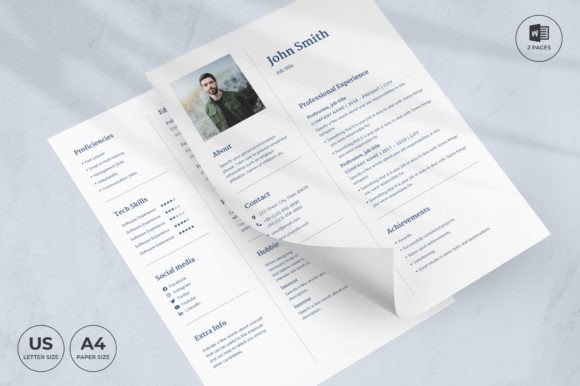
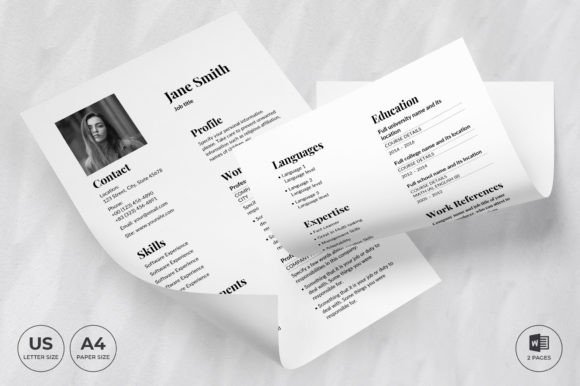
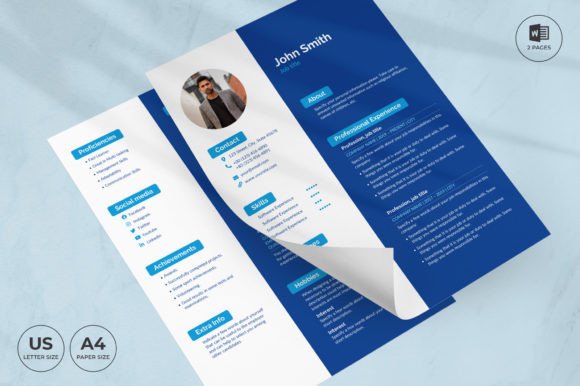
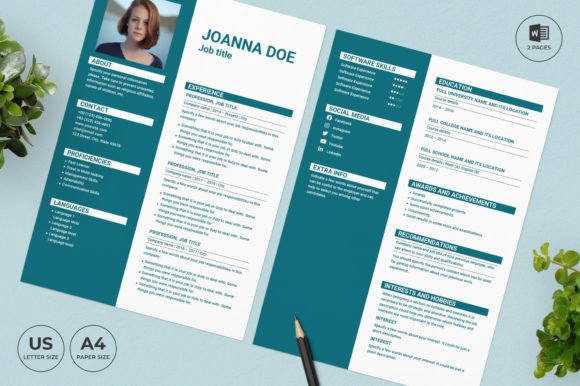
Landing a coveted position in a high-end salon, joining a celebrity's glam squad, or securing a contract with a major cosmetics brand requires more than just a steady hand with a blending brush. In the competitive world of beauty and aesthetics, your first impression often happens on paper—or a digital screen—long before you touch a client's face. A well-organized Resume/CV opens the door to prospective employers. It's important that the employer finds something catchy that will keep him/her reading through it. We know what employers are looking for. Resume templates are created to make your name memorable and move your resume to the top of the stack. Our mission is to make your CV template unboring and clear. A clean, modern, and professional resume design template is not just a piece of paper; it is a reflection of your aesthetic, your attention to detail, and your professionalism.
Visual Consistency and Brand Identity
For a creative professional, the document that lists your experience must visually align with the work you produce. If your portfolio features modern, editorial looks, but your resume looks like a generic text document from the 1990s, there is a disconnect. This disconnect can subconsciously signal to an employer that you lack an understanding of brand identity. Your resume is often the first piece of "packaging design" a client sees of you. It needs to communicate your personal brand immediately.
When you use a dedicated Makeup Artist Resume Template CV, you are ensuring that your typography, spacing, and layout work in harmony. This consistency builds trust. It shows that you understand visual communication—a critical skill for anyone in the beauty industry. Just as you would match a lip color to an undertone, your resume design needs to match the level of professionalism you bring to the table. This template approach helps you maintain a cohesive look across all your marketing assets, from business cards to social media bios, reinforcing your presence in the market.
Customization: Tailoring the Layout to Your Experience
No two careers in makeup artistry are the same. A bridal specialist highlights different skills than a special effects (SFX) artist or a retail beauty advisor. This is why a rigid document rarely works. The best design assets are the ones that offer flexibility without requiring a degree in graphic design to operate.
Look for a template that is fully customizable. You should be able to change every single word of all headings, titles, and body text. But the customization goes deeper than text. You need the ability to alter any color—whether it is the text, icons, colored areas, or lines. This allows you to infuse your personality into the document. Are you bold and edgy? Use a high-contrast color palette. Are you soft and romantic? Perhaps a muted pastel scheme works better.
Furthermore, the ability to change fonts is essential. While the template provides a starting point, you might want to adjust the size, color, or swap the typeface entirely to match your portfolio website. A good template allows you to add or delete sections to fit your needs. Perhaps you don't need a "Work Experience" section because you are just starting out, but you need a robust "Education and Certification" section. The layout should bend to your career path, not the other way around.
Practical Applications Beyond the Interview
While the primary goal of this document is to secure a job, the skills and format used in a professional CV have applications across your entire business ecosystem. Think of the structure of a resume as a blueprint for editorial design. The way you organize information on a CV—using hierarchy, bullet points, and white space to guide the eye—is the exact same technique used in:
- Media Kits: When pitching yourself to brands for collaborations, you need a document that summarizes your stats and aesthetic. A resume template can be adapted into a sleek media kit.
- Service Menus: For freelance artists, your list of services and prices needs to be just as readable and organized as your CV.
- Digital Products: If you decide to sell courses or guides on makeup techniques, the modern typography and grid systems found in premium templates are exactly what you need to create those PDFs.
- Social Media Graphics: The visual consistency established in your CV can be translated into Instagram Stories or Pinterest pins to maintain a cohesive feed.
By mastering the layout of a Makeup Artist Resume Template CV, you are effectively learning the basics of packaging design and web design layout. It teaches you how to prioritize information, a skill that is invaluable when designing promotional posters or merchandise for your own brand.
Typography and Readability: Choosing the Right Style
Typography is the voice of your design. In the context of a resume, it needs to be professional, but for a makeup artist, it also needs a touch of flair. You want to avoid fonts that are too difficult to read, but you also want to avoid fonts that are too boring.
When selecting your typeface, consider the personality of the brand you are applying to. A luxury department store might appreciate a refined serif font, which conveys tradition and elegance. A trendy, urban salon might prefer a clean sans serif font that feels modern and minimal. If you are a freelance artist building a personal brand, you might incorporate a subtle script font for your name as a logo, paired with a highly legible body text.
Here are a few practical tips for your typography choices:
- Contrast is Key: Pair a bold heading font with a lighter body font. This creates a visual hierarchy that makes the document easy to scan.
- Avoid "Boring": As mentioned in the mission of good templates, you want to avoid "unboring" documents. This doesn't mean using Comic Sans. It means choosing a premium font that has character. A geometric sans-serif can look incredibly chic and professional.
- Check the Licensing: Ensure the template uses free fonts or includes the license for commercial use. You don't want to run into legal issues later if you decide to use that same font for your logo design or brand identity materials.
- Size Matters: Body text should generally be between 10pt and 12pt for print. Headings can be larger to create impact. A template designed to a grid will help you maintain these proportions correctly.
Technical Specs and Print-Ready Design
In the digital age, we often forget that many employers still print resumes to review them during interviews. A document that looks good on your screen but prints poorly is a disaster. This is why the technical specifications of your template matter immensely.
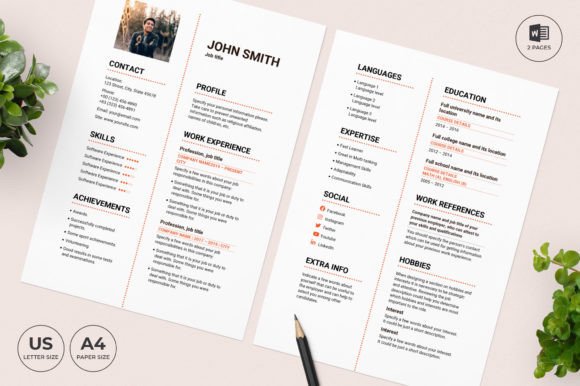
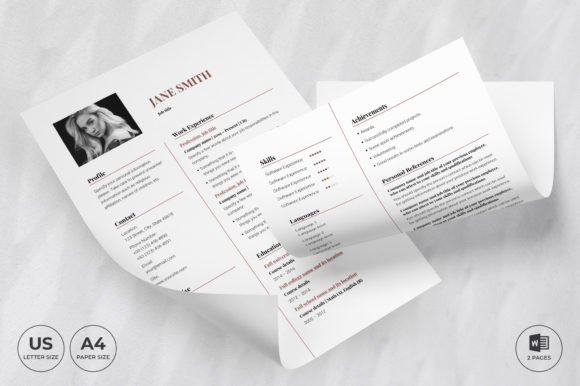
A high-quality template will come in standard sizes: Resume Letter (8.5×11in) for the US market and Resume A4 (210×297mm) for international applications. It should be carefully designed to a grid, ensuring that elements are aligned and the visual flow is smooth. When a document is "print-ready," it means the margins are set correctly so text doesn't get cut off by the printer, and the resolution is high enough (300 DPI) so that text and icons appear crisp.
Look for templates that provide high-resolution files in formats like Microsoft Word (DOCX). While PDF is the standard for sending, Word files are often requested by recruitment agencies that use Applicant Tracking Systems (ATS) to parse data. Having a neatly organized Word file ensures that the ATS can read your skills and experience correctly, without getting confused by complex formatting.
Ultimately, your resume is more than a list of jobs; it is a creative font of information that tells your story. By investing time in a professional, customizable template, you ensure that your story is told beautifully, clearly, and memorably. It is the bridge between your talent and your next big opportunity.